In the words of Winfred Phillips, "You have to be able to fabricate things, you have to be able to analyze things, you have to be able to handle things smaller than ever imagined in ways not done before."
In the words of Winfred Phillips, "You have to be able to fabricate things, you have to be able to analyze things, you have to be able to handle things smaller than ever imagined in ways not done before."
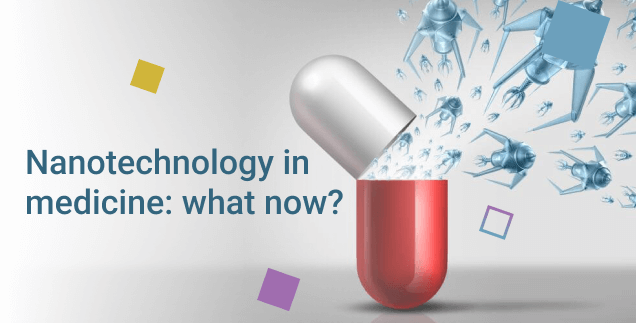
Decades ago, people's wonder, curiosity, and ingenuity brought them to question the limits of the known world. When studying matter at a nanoscale level, it's only understandable that scientists, engineers, and doctors would use this field of study to improve health. In nanomedicine, scientists can now observe nanometer-sized structures, materials and particles. With the advent of the coronavirus, there is increasing optimism that nanotechnology applied to medicine can bring significant advances to the diagnosis, treatment, and prevention of disease.
Nanotechnology provides medication developers with virus binders, cell membrane decoys, or viral-envelope inhibitors that can be used to supplement standard antiviral medicines. Some researchers are hopeful that these materials may soon be ready for public use, thanks to an injection of funding sparked by COVID-19.
In the past, nanomaterials have already proven to be effective in combating SARS-CoV-2. These tiny particles are showing promise as carriers for small-molecule antiviral medicines, building on decades of success in the nanoscale drug delivery.
The COVID-19 pandemic has sparked interest in medical nanomaterials that can stop viruses in their tracks rather than simply acting as delivery vehicles for medications or vaccines. As this technology evolves, here are three trends that we have observed this year.
Target specification
Companies developing nanomedicines want to improve the technology to target specific cells or tissues. Scientists are seeing if these nanoparticles can attach to medications or liposomes to promote specific localization. It is then used to find cells of interest since different cell types have varied characteristics. This enables the delivery of related medications and therapies to sick tissue while avoiding healthy cells.
Controlled drug release
The industry is becoming interested in controlling the release of medicine using nanotechnology. This "triggered" release could theoretically come from either inside or outside the body. External stimuli include temperature changes, light, or ultrasound, while internal causes include alterations in the environment of tumors compared to adjacent tissue.
Understanding different patient populations
In general, there is a dearth of understanding of what distinguishes patients from one another when medications do not have universal efficacy. This explains why nanotechnologies aren't always successful in improving drug therapeutic output for every patient.
Challenges in nanotechnology
The rate of clinical nanomedicine translation has accelerated recently. This has boosted research efforts in the recent decade to better understand nanoparticle–biological interactions (nano-bio). This research looked at how certain nanoparticle designs affect therapeutic effectiveness, delivery, and toxicity. In turn, the data experts have gathered helped establish general principles and spark mechanistic studies of nanoparticles in many biological settings. The goal of nano-bio interaction research is to investigate the how nanoparticles would react to each other. In the realm of nanomedicine, nano-bio interactions have become a "fundamental" research arm.
Machine learning and artificial intelligence approaches are being used in nano-bio interaction research to computationally establish correlations between nanoparticle design, delivery, side effects, and medicinal performance. The link between nanoparticle design, biological interaction, and the therapeutic outcome will take time to unravel. The findings will lead to a more rational approach to nanomedicine engineering.
Understanding the difficulties, failures, and achievements of nanoparticles in clinical applications is critical for future nanomedicine success. The nano-bio interaction research has revealed important nanoparticle–biological delivery obstacles, which may help in disease target selection. Delivering nanoparticles to solid tumors, for example, is difficult due to the numerous hurdles nanoparticles must overcome in order to reach cancer cells. Other biological targets may be easier to access and more effective for nanoparticles as a result of this discovery.
This new phase in the evolution of nanomedicine requires a firm foundation. First, we should concentrate on measures to hasten their translation so that patients can benefit from the last thirty years of progress. Second, we are now reaching new depths in our knowledge of nanomedicine's fate inside the body, which must continue to influence future design. We're also moving away from projects directed by engineers and chemists and toward ones that involve more clinicians. Physicians will play a vital part here, and we offer ways for them to support the next phase. First, doctors should identify problems with present treatments, offer alternative diagnostic and therapeutic options, and direct the design of experiments that will lead to clinically approved nanomedicines. Second, doctors can contribute clinical samples and help construct illness models. Third, they can assist researchers with clinically relevant characteristics and experiments that simulate clinical circumstances throughout the engineering process. Finally, when it comes to clinical translations, physicians can recruit patients and other hospitals, organize trials, assess efficacy, and discover techniques to control side effects not detected in pre-clinical investigations. In order to advance nanomedicines for the benefit of patients, engineers and physicians must collaborate.
There is still much to learn and research. Engineers, biologists, and clinicians must work together to make progress in this field of research. The progress of nanomaterials and vaccines in clinical trials will ensure enthusiasm from both the public and government. Nanomedicine can eventually benefit the healthcare system when we combine our enthusiasm and insights.
Copyright © 2022 Corporality Global. All rights reserved. Corporality and its logo are trademarks of Corporality Global.