
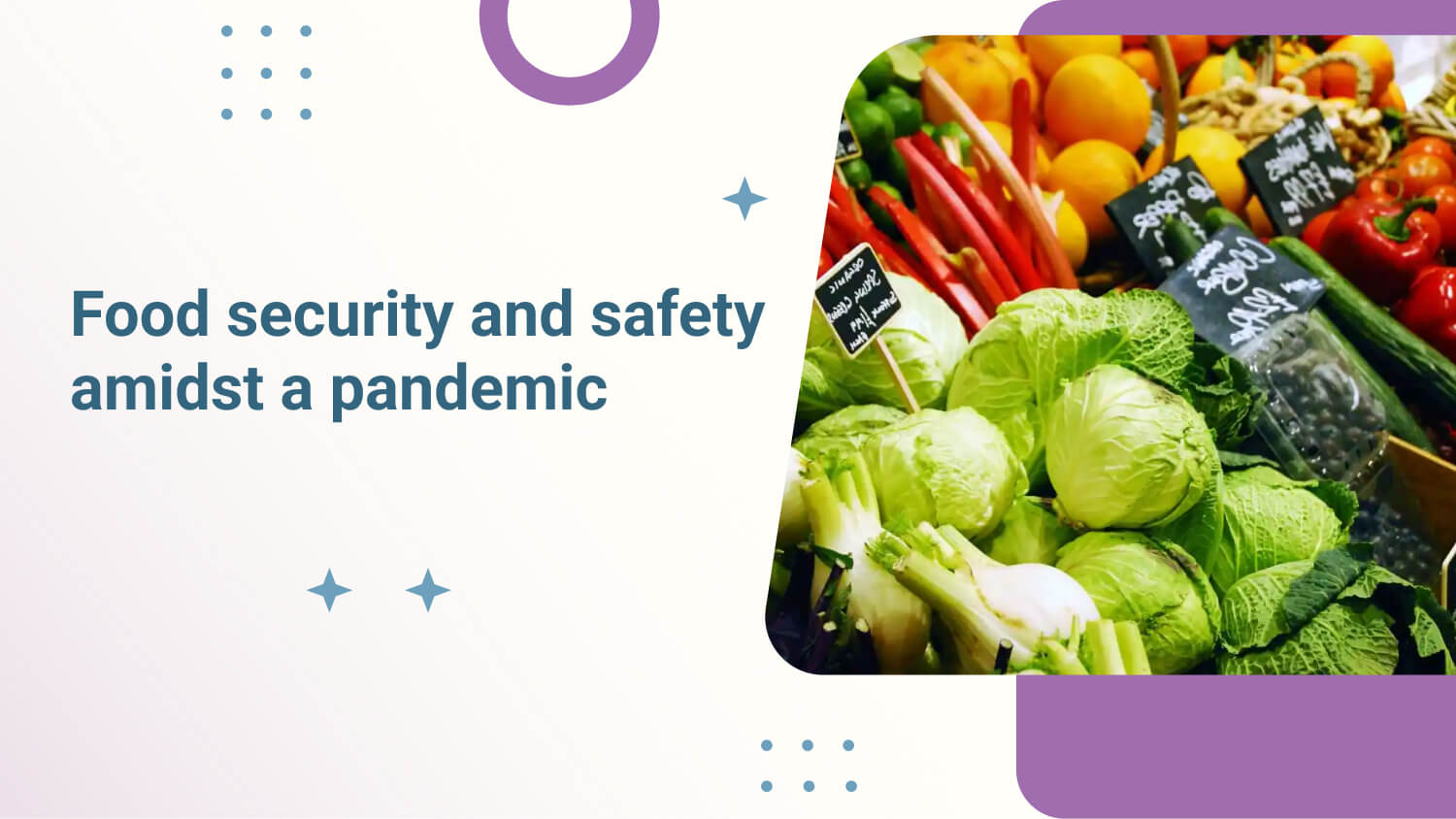
At its height, the coronavirus pandemic has revealed the holes in our global food production and exacerbated food poverty. What can we do to help?
By lowering salaries and upsetting food supply systems, the COVID-19 pandemic exacerbated food poverty globally, which was already a problem due to Russia's aggressive invasion of Ukraine. The pandemic continues to have a catastrophic impact on world hunger and poverty, particularly on the most vulnerable and underprivileged communities. There are now 276 million more people than there were before the outbreak who are seriously food insecure. The World Food Program (WFP) projects that this number will increase to 323 million people by the end of 2022 as a result of the aggravating impacts of ongoing social, political, and economic problems around the world.
Effects on agriculture earnings and production
In many nations, especially those characterized by periods of peak seasonal labor demand or labor-intensive production, labor shortages for agricultural industries are a result of restrictions on people's ability to move across borders and lockdowns. For instance, the number of workers available for the fruit and vegetable industry in a number of European nations has been drastically reduced as a result of recently enforced travel restrictions inside the European Union and the closure of the Schengen Area. In the northern hemisphere, numerous items are about to enter their harvest season; therefore, a labor shortage could result in production losses and market shortages. This adds to the problems many nations already face when trying to find seasonal labor.
However, disturbances after the farm gate can sometimes result in surpluses building up, straining storage facilities and, for highly perishables, escalating food losses. Demand side declines for some products are aggravating supply side difficulties. The combined consequences of these factors are exerting pressure on farm revenues. Reduced off-farm income may further increase the losses in farm household income.
The COVID-19 epidemic may potentially have an impact on farmers' access to important intermediate inputs. In industrialized countries' agricultural production areas, there do not now appear to be any shortages, though increasing limitations on the movement of people and products may make it harder for farmers to find inputs. However, in China, for instance, when production facilities were shut down as a result of the outbreak, pesticide output began to gradually increase again. Inputs like insecticides may be hard to come by or expensive, which might have an impact on crop yields and production in 2020 and 2021, especially in developing nations. The production of agriculture, feed, and food during the upcoming season and into the future may be negatively impacted by border closures or restrictions on the transboundary flow of seeds.
As the nation's unemployment rate climbs, the number of people who lack access to food continues to rise.
If you have the means to help with the Covid-19 reaction, think about giving money to a food bank. Money is more useful to food banks than food donations. And kindly think about only purchasing what you actually need at the grocery store so that others in the neighborhood can get the things they require.
Although official advice advises households to stock up on food for two weeks, many families find this to be extremely difficult. Furthermore, research shows that people in low-income areas are more susceptible to chronic health issues, which are also known to increase the risk of the coronavirus death by up to 10 times.
Making the food system more robust and sustainable is now an even higher priority in light of COVID-19. The COVID-19 pandemic offers an opportunity to better understand the chokepoints and vulnerabilities in the food system in order to pinpoint the investments and reforms that are required to increase the sector's resilience to a variety of upcoming shocks and difficulties. Involving stakeholders in the process of comprehending the entire effects of the pandemic on different population groups and the lessons to be gained will be essential. In particular, it will be crucial to look at the food system's present resilience toolkit in order to determine which policy measures have shown to be most successful and what new measures might be required to react to systemic shocks. Understanding the variables that allow some food and farming firms to quickly modify their business models in order to escape the worst effects will be especially crucial.
Lessons learned from the COVID-19 pandemic will need to be incorporated into more comprehensive solutions to the problems facing the world food system. These difficulties include:
- The ongoing crisis of climate change, as well as the requirement that the food system be adaptable to a variety of extreme weather occurrences.
- The requirement for maintaining sustainable productivity growth in order to feed an expanding global population in a changing climate while simultaneously lowering the sector's greenhouse gas emissions.
- Preserving biodiversity in the face of agricultural land use change, the control of novel kinds, and disease threats from monocultures.
- A variety of animal and plant illnesses, including those that directly impact human health by inducing food-borne illness, human-to-human transfer, and antibiotic resistance, as well as those that have an impact on food security by lowering animal and crop productivity.
Corporality Global is a brand that aims to enlighten you about the various marketing strategies and helps you get in front of your audience. CEOs and CMOs can take control without disrupting their existing framework and infuse potent schemes to help business growth. Book a discovery call with us today!
Copyright © 2022 Corporality Global. All rights reserved. Corporality and its logo are trademarks of Corporality Global.