
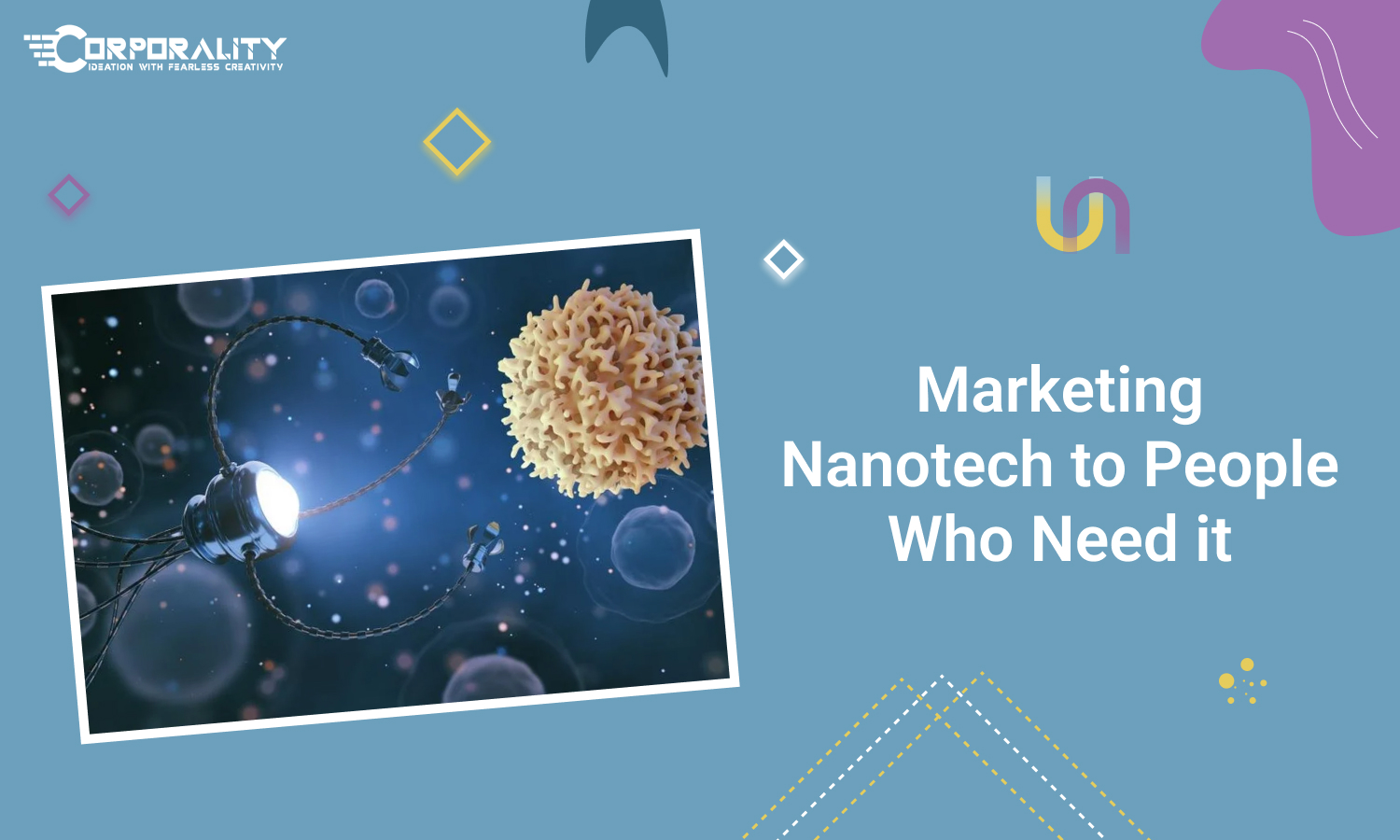
Nanotech can be an intimidating industry, because not many people are well-versed in the sciences. However, there is a way to make nanotech products more relevant to people's daily lives.
Nanotechnology is the field of science, engineering, and technology that is concerned with functional systems at the molecular scale, or less than 100 nm. Nanotechnology is the science that underlies a wide range of applications, including the creation of water-resistant cellphones, tailored medicine delivery in patients, and more energy-efficient TVs made by electronics businesses.
The 1980s saw the full emergence of the sector, and since then it has expanded quickly. Showcasing the advantages and USPs of your technology or product gets noticeably more difficult as the market grows more competitive.
Only 3 percent of your clients are actively looking to buy at any given time. Numerous decision-makers must frequently be consulted, and budgetary procedures must be followed.
Marketing Technical Content
To have your message heard in the saturated nanotechnology market, you must properly promote your product, service, or even new technology. According to the Project on Emerging Nanotechnologies, as of August 21, 2008, there were over 800 manufacturer-identified nanotech items that were publicly accessible, and three to four new ones were introduced to the market every week. Examples of recent commercializations of nanotechnology-based goods include:
- Nanoparticles are used in new lithium ion batteries for power tools and other uses.
- Nanoparticle-enhanced paints and plastics that prevent static buildup.
- Future solar cells based on nanomaterials are receiving significant investment.
- Nanomaterials will probably soon be used in touch screens and flexible displays for consumer gadgets.
Companies that use nanotechnology to differentiate their products in the marketplace face a range of hurdles in addition to the opportunities it presents. It could be challenging to explain nanotechnology to customers. The term "nanotechnology" can signify different things to different people due to the scope and complexity of the technology itself. In fact, a "nano inside" ingredient brand marketing may convey information about electronics employing nanoscale materials very differently than a campaign for cosmetics or pharmaceuticals.
Negative press about potential toxicity risks with manmade nanomaterials has also affected the nanotech industry. Negative publicity about nanotechnology as a whole can be fatal to building the brand of a product's nanotech element. For instance, in a study published in November by UK consumer advocacy publication Which? According to a magazine article titled "Small Wonder: Nanotechnology in Cosmetics," there are "unresolved questions" about the safety of nanotechnology in cosmetics. Also mentioned was the reluctance of cosmetic corporations to disclose which of their products use nanotechnology. In a letter to 67 cosmetics companies, the magazine inquired about their use of nanotechnology, the advantages they believed it offered, and how they ensured the safety of their products. Only 8 of the 17 respondents were willing to share details about their use of nanotechnology. The article continued by alleging that cosmetic businesses fail to mention nanotechnology in labels and in advertising, so causing the general public to be mostly unaware of the technology.
Marketing Strategies that Businesses Can Do
Despite the difficulties, developing a very effective marketing campaign based on the "micro within" notion may be viable. There is a chance to educate audiences and develop a leading position in presenting nanotechnology-based products to the world because the general public does not have a thorough understanding of the topic. Companies should take a deliberate, multifaceted strategy when marketing nanotechnology-based products.
Companies must first explain their technology and how it adds value to the final products or services, just like they would in any marketing effort. Every technique and every theory that describes a technical topic may be related to advantages and made attractive to audiences, provided that it is clearly understood and applicable to consumers. Benefits are the overriding goal that drives marketing initiatives. This is simply done by turning facts, scientific knowledge, and analysis into symbols, visuals, sounds, and labels, then contrasting them with concepts that the average person can easily comprehend.
The Genomic Analogy Model for Educators (GAME), an educational tool for high school science teachers and higher education instructors, is a well-known example of how analogies are used to communicate complex concepts to a non-technical audience. It does this by using relatable objects and ideas from everyday life.
Although not well acknowledged, the same unique qualities that make nanoparticles commercially desirable also pose potentially major hazards to human health and the environment. However, according to a report published in November 2007 by Dietram A. Scheufele, Professor of Journalism and Mass Communication and Life Sciences Communication at the University of Wisconsin, and Elizabeth Corley, Associate Professor in the School of Public Affairs at Arizona State University, research into the potential dangers that nanotechnology poses to the environment, health, and safety is only just beginning to make its way onto the policy agenda. A nationwide telephone survey of American families and 363 top nanotechnology researchers served as the report's foundation.
There is a chance to educate proactively and influence the public by having product communications prepared that explain how products are distinct from potentially "unsafe nanotechnology," but only if it is pertinent to the decision-making process. In order for businesses to differentiate themselves properly and their products, a responsible and proactive strategy would prioritize risk assessment and management related to nanotechnology as well as standardizing terminology and ideology. As beer distributors are pioneers in advocating the lawful and responsible consumption of alcoholic beverages, they might then emerge as the voice of responsible nanotechnology.
Second, businesses might need to collaborate with other groups that have direct-to-consumer channels. For instance, Intel was not particularly appealing to consumers on its own. Consumers began to favour PCs with "Intel Inside" by conducting a strong and effective print and TV advertising campaign and welcoming hardware partners.
Third, it will be crucial to enlist a well-known person that the public can rely on to disseminate information. People tend to agree with the expert whose values are closest to their own when weighing the possible benefits and risks of a new technology, according to the Project on Emerging Nanotechnologies (PEN), regardless of the viewpoint the expert takes. The survey, which included 1,600 American adults, emphasizes how important it is for the general people to learn about nanotechnology from reliable sources. High profile individuals have utilized their celebrity status for years to point out and increase awareness of a variety of goods and causes.
Fourth, businesses that sell nanotechnology-based products should think about joining larger coalitions so they can implement industry-wide marketing initiatives made to inform and enlighten consumers. In order to improve consumer demand and promote awareness of the necessity for better advertising and marketing of polished diamonds and diamond jewelry, the International Diamond Manufacturers Association (IDMA) began a broad industry-wide diamond promotion campaign earlier this year.
Fifth, since consumer experience and knowledge levels vary widely, knowledgeable sales assistants may be needed to support purchasing decisions. In order to help sales reps, it will be necessary to collaborate with the end user channel and ensure the consistency and suitability of the suggested good or service. Support will also make sure that representatives can ascertain the needs of customers, find the items or services that will satisfy those needs, and spot extra sales chances.
Last but not least, employing cutting-edge marketing strategies, sticking to an aggressive marketing budget, and sustaining a sizable campaign expenditure even during economic downturns will be essential to successfully selling "nano inside."
Corporality Global is a brand that aims to enlighten you about the various marketing strategies and helps you get in front of your audience. CEOs and CMOs can take control without disrupting their existing framework and infuse potent schemes to help business growth. Book a discovery call with us today!
Copyright © 2022 Corporality Global. All rights reserved. Corporality and its logo are trademarks of Corporality Global.