
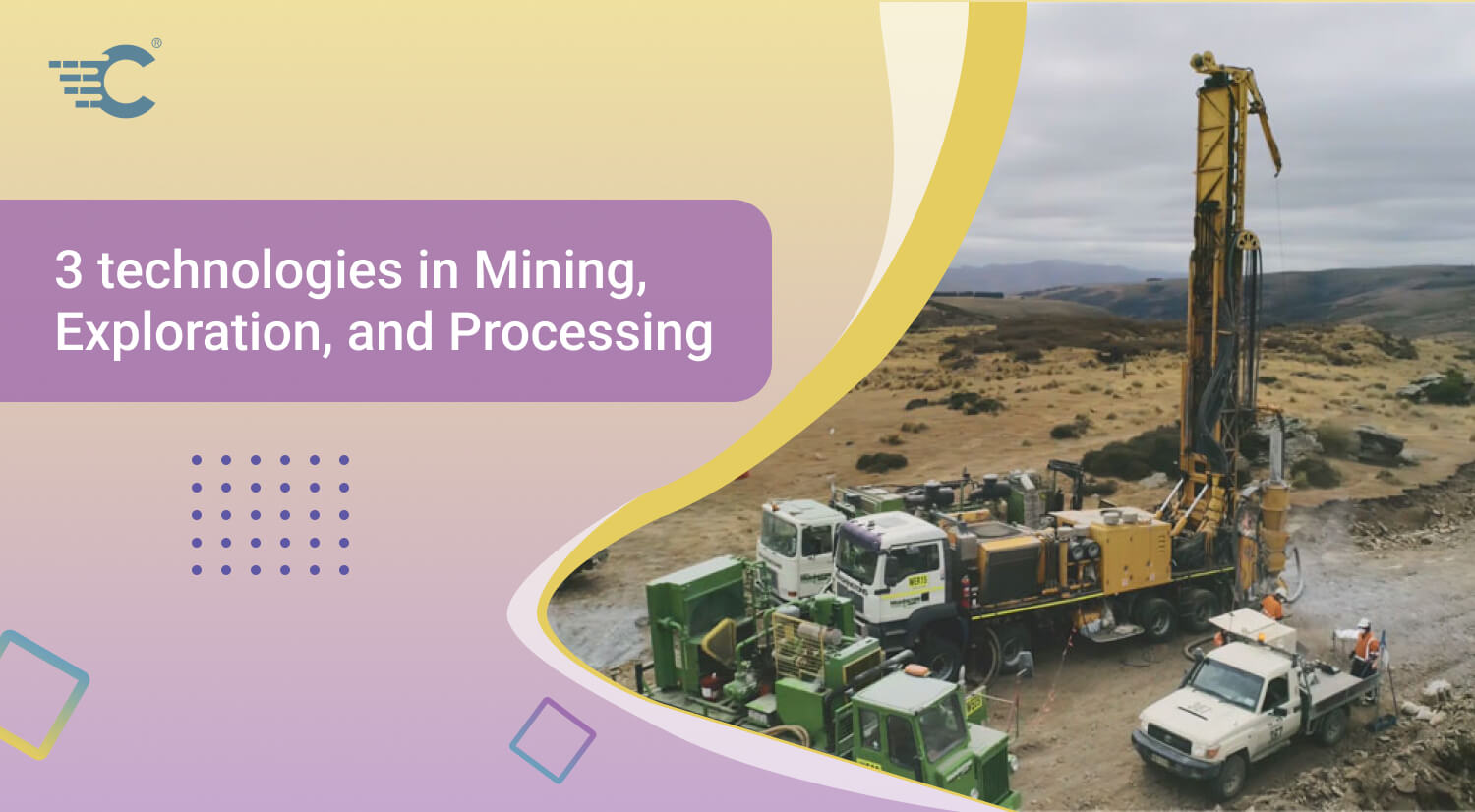
With the amount of mining accidents that happen in a year, we need to use the right technology to keep our employees and investments safe. Find out how AI and machine learning can help.
Actors in the mining industry are investing more than ever in new exploration technologies, from chemical research to the development of machine learning solutions.
The industry has continued to explore new areas and launch new projects despite growing concern over the environmental effects of large-scale mining. Miners are ready to invest in new projects in areas not generally thought of as mining heartlands, as seen by the inauguration of the UK's first coal mine in 30 years and the construction of the enormous Adani Carmichael coal mine in Australia.
Because businesses will need to make a significant investment starting out, there is a certain level of risk involved. The Covid-19 outbreak and the ensuing global economic instability have increased this level of risk. Despite little indication that the global demand for minerals is slowing, S&P Global estimated earlier this year that mineral exploration spending is expected to decline from $9.3 billion in 2019 to $6.6 billion by the end of 2020.
As a result, it is now more important than ever to strike a balance between exploration and the predetermined financial risks. Because of this, experts in the mining industry are inventing novel ways to make exploration financially secure and boost the likelihood of success.
Using Artificial Intelligence in Mineral Exploration
More businesses are utilizing "explainable AI" and machine learning to generate better research targets, expedite the exploration process, and even serve as a virtual adviser over the last five years.
Finding these more complex deposits requires using machine learning, which has shown to be an effective method for processing the enormous quantity of data gathered during exploration. AI is able to accomplish this by more effectively leveraging training data (maps with well-known deposits and features) and after the data has been cleaned, converted, and evaluated to more accurately forecast targets. The software can highlight ore deposits and map out these places in great detail using AI and machine learning.
AI Company for Exploration
Earth AI creates a complex database of mineral deposits throughout the world using data from a variety of sources, including NASA and open source data from Geoscience Australia. This database may then be used to forecast future deposits in uncharted areas. Although the mining sector uses this technology frequently and in various forms, the scope of Earth AI's work is astonishing.
The start-up raised over $4 million in capital from investors including Gagarin Capital and AirTree Ventures within three years of its establishment in 2016, in large part as a result of the significant financial and operational advantages the business provides.
In contrast to the millions of dollars generally spent on exploration, Earth AI spent an average of $11,000 per prospect discovered in its 2018 pilot tests, testing its system in uncharted areas of Australia. The corporation asserted that their success rate was 50 times higher than that of conventional exploration techniques. Since then, Earth AI has expanded to incorporate a variety of other cutting-edge technologies, including drone-based magnetic surveys, which the company claims can be completed ten times faster and for just a quarter of the price of conventional surveying operations.
By deploying its own camps and supplies for exploration operations in distant places, which can take up to three weeks, the company also intends to offer a comprehensive package to mining corporations. Once more, Earth AI touts enormous financial savings. It is claimed that by utilizing its infrastructure, miners can expect to save 75% on geochemical or geophysical surveys. This blend of modern technology and operational effectiveness covers a number of exploration bases that are uncommon in the industry.
Technologies used for Drilling
When it comes to using modern drilling technologies, the mining industry has lagged considerably behind the oil and gas sector. Even though drilling is typically the single highest expense connected with mineral exploration, there haven't been many advancements in mineral drilling technology.
Companies are currently downsizing downhole equipment and technology used in the petroleum business so they may be employed in thin holes during exploration. Companies' costs for mineral exploration and development would significantly drop if they could increase the quantity of drill holes they make, drill at a faster rate, or use less energy while doing so.
In many cases, directional drilling could drastically minimize the quantity of drill holes necessary to find a resource beneath the surface. The drilling pace may be increased by new drilling technologies including down-hole hammers, turbodrills, in-hole drilling motors, and jet drilling systems.
A common approach in petroleum exploration is down-hole logging. It was, however, infrequently applied to mineral exploration. The creation of down-hole analytical tools like spectrometers would enable in-situ, real-time analysis of trace components inside the rock mass, greatly reducing the time needed to ascertain whether a drill hole had "hit" or not.
High-tech Drilling Company
A US-based business called Imago has created a high-quality camera that can photograph components extracted from deposits and store these images on its own cloud network to let employees from different departments of a firm evaluate the composition of a deposit. Then, this method serves as the foundation for a second, machine learning-based method, the kind that is becoming popular in the exploration industry. By selectively drilling in areas where they are likely to find materials, many businesses are anxious to keep their capital expenditures to a minimum.
By analyzing the photos created on-site, the company's computers can infer which minerals are most likely to be found further in the vicinity. In order to build a predictive database of deposits that is based on the examination of actual products brought up from below the surface, the analysis can also extrapolate to comparable deposits in other places.
The increasingly technologically advanced and interconnected nature of the mining industry is another advantage of Imago's solutions. As a result of the company's use of recently popularized but long-established technologies, such as cloud storage solutions, its analysis process exports data that can be used with clients' own predictive modeling software. This means that the company's work integrates very well with current mining data collection and analysis systems.
Discovering new resources and extending the lifespan of established mining operations both depend on exploration. If there was no valuable material in the ground to extract, mining companies might automate operations and make them more efficient.
Given the enormous amount of data that geologists must sift through, using artificial intelligence and machine learning to the mineral exploration sector is crucial. By choosing better targets, businesses can make the most of their few resources by conducting drilling that is more ecologically friendly, targets deeper deposits, and gathers more downhole data, increasing the likelihood of discovering significant mineralization.
Corporality Global is a brand that aims to enlighten you about the various marketing strategies and helps you get in front of your audience. CEOs and CMOs can take control without disrupting their existing framework and infuse potent schemes to help business growth. Book a discovery call with us today!
Copyright © 2022 Corporality Global. All rights reserved. Corporality and its logo are trademarks of Corporality Global.