Learn how your call to action could be hindering your lead generation. Explore common pitfalls and discover how to create effective CTAs that drive more business leads.
Do you want to increase your conversions? Or perhaps, you want to increase your business’s email list or gain new subscribers to a workshop.
It does not matter how good the content, idea or marketing of your business is, without the right call to action it is impossible to achieve these goals.

Credit: Host Papa
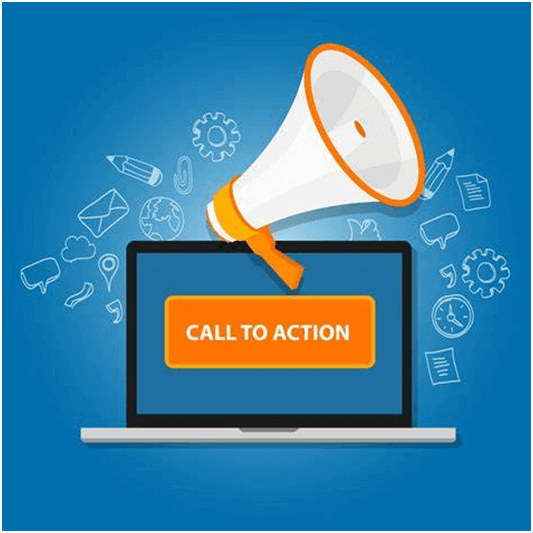
A call to action can be described as a statement which is used by a business to evoke an immediate response from the person reading or hearing it.
It is, quite literally, a call to act.
If you take a minute to think about all the times you have signed up for a service what was that defining message? The one that made you type in your name, email address and payment details without a second thought. It is highly likely that each and every one of those sign ups is a result of an effective call to action.
What makes an effective call to action?
The most effective call to actions are those that form a connection with your business’s target customer persona. They are the stories, advertisements and messages that no only encourage their audiences to do something. They leave a lasting impression.
A great call to action can help your business to convert viewers, visitors or readers into convertible leads for your business’s sales team.
Common calls to action include providing your business’s:
- Phone Number
- Online Sign Up Forms
- E-Newsletter Subscriptions
- Social Media Links
- Add to Cart and Check-out Capabilities.
Whilst not every effective call to action will look identical, these 6 characteristics must feature in every effective call to action.
1. Make it Visual.

Credit: Post Cron
In such a heavily saturated marketing sphere, your business’s message can easily be lost in the crowd.
According to research conducted by HubSpot, consumers will recall less than 10% of information in 3 days. However, when that information is accompanied with an image, the retention of information increases to 65%.
Thus, by utilising visual content such as infographics, images or videos, you can easily and effectively make your call to action stand out from the rest of the content on a page and increase the memorability of your business.
2. Make it Direct.

Credit: Life Hacker Australia
Have you ever wondered why pop ups that sell everything from e-books to e-newsletters and workshops seem to appear on almost every website that you open these days? I certainly know that we have been guilty of it more than a few times ourselves.
But research suggests that on average, 55%of visitors will spend less than 15 seconds on your website. This means that you have to stop beating around the bush.
Be direct in your approach and clearly tell your visitors what they need to do. Your message should be simple, short and strong so that there is no confusion as to what your customer’s next move is.
3. Make it Actionable.

Credit: GX Academy
Not all words were created equally and as a marketer, you need to recognise that the language that you use is everything when it comes to converting leads.
Using action words will compel your visitors to do what you want them to.
For example, “Call us today to receive your free sample”, is a great call to action.
It gives a clear and actionable directive to your customer through the verb “call” as well as providing an incentive for them to take that action today.
4. Make it Urgent.

Credit: BetaBase
A call to action needs to create an urgency in the mind of your customer, because without it,why would your visitors convert?
Give them with a reason.
A great strategy to evoke this sense of urgency is to convince them that a clock is ticking and if they do not act right now, they will miss the opportunity entirely.
For example, a call to action such as Buy now and get 50% off”, is a commonly used tactic by online stores such as Amazon and eBay.
But many business’s go even further to secure these conversions.
A well-tested and extremely effective approach is to clearly show that the offer is available for a limited time only.
Whether the “offer” is associated with the price or availability of the item, words such as “now”, “today” or “immediately” can imply the sense of urgency that is needed to convert them into your newest customer.
5. Make it Simple.
 As we have discussed in our previous blogs about omni channel marketing, the transition from a call to action and actually performing that task must be seamless.
When a call to action is too complex or if it will take too long, it is bound to fail.
If you want your customer to get in touch with you give them your number, hours and address. If you want them to purchase a product or service, tell them the price of it.
A call to action should not be a lengthy or difficult process for your customer and you should make sure they know that.
6. Make it Unique.

Credit: One Mind, One Energy
The last but perhaps most obvious characteristic of an effective call to action is to ensure that it stands out from the crowd.
One of the greatest assets that any marketer has is their ability to differentiate themselves from the competition.
Finding that something that makes your call to action unique, whether it is something that is ridiculously simple or just plain ridiculous, can be the biggest driver of conversions for your business.
Conclusion.
Too often, marketers focus solely on creating campaigns that are visually stimulating and content rich at the expense of an effective call to action.
A call to action can be one of the most effective conversion tools that your business has.
You need to consider what your business’s objectives are and devise a call to action that is clear, actionable and memorable.
In doing so, you can ensure that you are targeting your customer’s persona in the most effective way possible during the buyer’s journey, thus increasing the conversion rates of your business.